
Quick Summary
- Hydrostatic pressure is the force water-saturated soil exerts against your foundation walls — and NJ’s clay-heavy soil makes it worse than most homeowners realize.
- A bowing wall or horizontal crack isn’t cosmetic. It’s a sign the soil outside is winning a slow structural argument with your foundation.
- The permanent fix isn’t a waterproof coating — it’s drainage. An interior French drain intercepts the water before pressure can build.
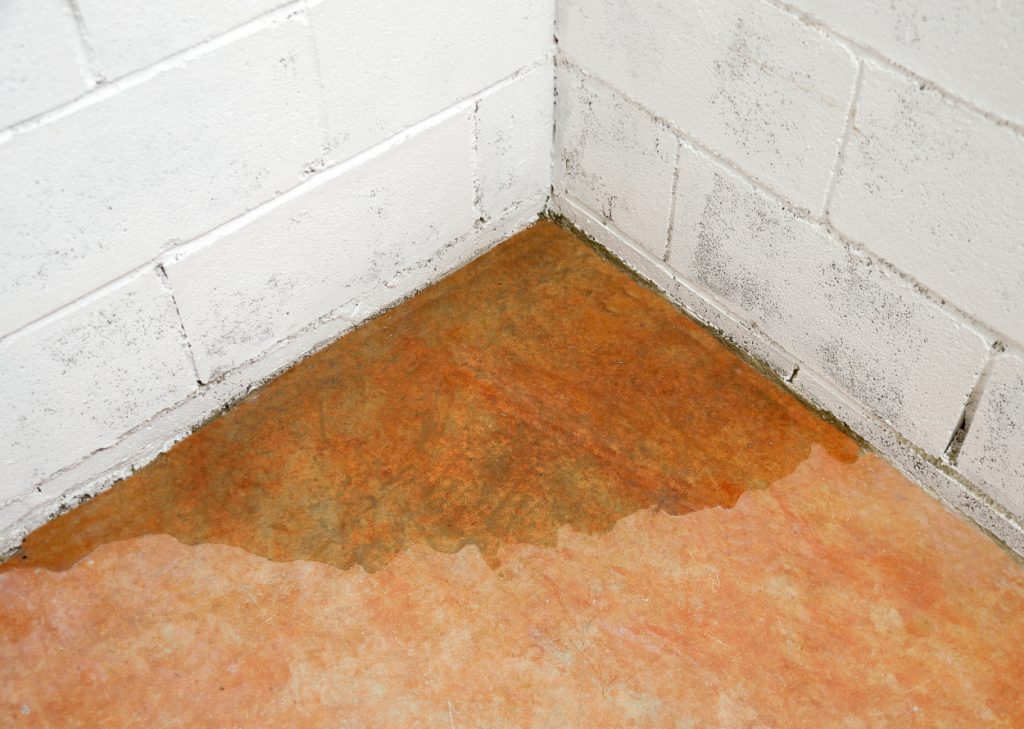
If you’ve noticed a horizontal crack running across a basement wall — or a wall that looks like it’s leaning slightly inward — you’re looking at hydrostatic pressure at work. That’s the force water-saturated soil exerts against your foundation, and in Northern New Jersey, it’s a bigger problem than most homeowners expect.
The crack didn’t appear overnight. It’s the result of a slow, repeating cycle: water builds up in the soil outside your home, pushes inward, and gradually wins. Understanding that the cycle is the first step to knowing what you’re actually dealing with — and what it takes to stop it.
What Is Hydrostatic Pressure? (And Why NJ Homeowners Deal With It More Than Most)
Water doesn’t compress. When soil becomes saturated after heavy rain, that water has to go somewhere — and it pushes outward in every direction, including against your foundation walls. That outward force is hydrostatic pressure.
In most parts of the country, soil drains relatively quickly after a storm, which limits how long that pressure builds. In Essex, Passaic, and Morris Counties, the soil composition is different. The heavy clay content common across this region absorbs water slowly and releases it even more slowly. According to USGS groundwater data, clay-dominant soils in the Northeast can remain saturated for days after a storm has passed — meaning the pressure against your foundation walls doesn’t stop when the rain does.
Add in New Jersey’s freeze-thaw cycles — where soil expands as it freezes in winter and contracts as it thaws — and that pressure compounds over years, not just during individual storm events.
What Saturated Soil Actually Does to Your Foundation Walls
Most people picture water pressure as something that pushes through a wall all at once. That’s not how it works. What actually happens is slower — and in some ways more telling.
The Anatomy of a Micro-Fissure
Block and poured concrete foundations aren’t perfectly solid. At a microscopic level, they contain tiny voids — hairline gaps in the material that are invisible to the eye. When hydrostatic pressure builds outside your foundation, water finds those voids and begins working its way in.
Each time the soil saturates and dries out, water expands and contracts inside those microscopic gaps. Over multiple wet/dry cycles — and in NJ, those cycles happen every season —the voids widen. What starts as a hairline void becomes a micro-fissure. What starts as a micro-fissure eventually becomes the crack you can see from across the room.
This is the step most contractors skip when explaining what’s happening. They jump from “water pressure” to “bowing wall” without explaining the mechanism in between. But understanding it matters, because it tells you something important: by the time you can see a crack, the process has been underway for a while. That’s not a reason to panic — it’s a reason to act before the next wet season.
Why Bowing Walls Are a Warning Sign, Not Just a Cosmetic Issue
Not all foundation cracks are equal. Vertical hairline cracks —the kind that run straight up and down— are common in poured concrete foundations and often result from normal curing and settling. They’re worth monitoring, but they’re not usually urgent.
Horizontal cracks are different. A crack running sideways across a block or stone foundation wall is a sign of lateral pressure — soil pushing in from the side. That’s the specific kind of force hydrostatic pressure creates.
When you see a wall that’s bowing inward — even slightly — it means the wall is losing the structural argument with the soil outside it. Left unaddressed, the crack widens, the bow increases, and what’s currently a drainage problem becomes a structural repair. The cost difference between those two scenarios is significant.
The good news: caught at the crack-and-bow stage, this is a solvable problem. It doesn’t require excavating your yard or rebuilding your foundation. It requires relieving the pressure that’s causing it. For foundation repair options for NJ homeowners who are further along, those exist too — but the earlier you address it, the simpler the path forward.
If you’re seeing a horizontal crack or any inward movement on a basement wall, the smartest move is getting a professional set of eyes on it before the next storm season. ARD Waterproofing offers free assessments — no sales pitch, no pressure to commit. We’ll tell you exactly what we see and what it would take to fix it.Schedule a free assessment with ARD Waterproofing.
How Interior French Drains Relieve the Pressure Permanently
Here’s where most people’s understanding of the problem leads them in the wrong direction.
When homeowners — or less experienced contractors — think about water getting into a basement, they think about waterproofing: coatings, sealants, hydraulic cement. Those products have their place, but they don’t solve a hydrostatic pressure problem. They resist the pressure temporarily, redirecting it until something else in the wall gives way.
Most people think of this as a waterproofing problem. It’s actually a drainage problem — and that distinction matters when it comes to choosing the right fix. The only way to permanently relieve hydrostatic pressure is to give the water a controlled path to go, before it builds enough force to push through your walls.
That’s exactly what interior French drain installation does.
What Happens Underground When the System Is Installed
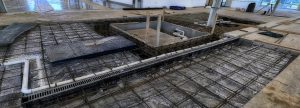
An interior French drain system is installed along the perimeter of your basement floor, at the base of the foundation walls. A channel is cut through the concrete, a perforated pipe is set in place, and the system is designed to intercept groundwater before it can build pressure against the wall.
The water that enters the system is routed to a sump pump system to handle the collected water, which pumps it out and away from the foundation. The concrete floor is restored over the pipe — when the job is done, the only visible change is a dry basement.
What’s happening below the surface is that the water now has somewhere to go. Instead of building up against your foundation wall and forcing its way through micro-fissures, it drains into the system and gets removed. The pressure that was bowing your wall is gone — not redirected, not temporarily blocked. Gone.
For homeowners who’ve had waterproof paint or hydraulic cement applied before and watched it fail by the next spring, this is why: those approaches fight the water. Interior drainage works with it.
Is This a “Fix It Now” or “Watch It” Situation?
Honest answer: it depends on what you’re seeing.
Act now if:
- You have a horizontal crack running across a basement wall
- You can see any inward bow or lean on a wall
- The crack has grown or changed since you first noticed it
- Water is actively seeping through the wall after rain
Monitor, but get assessed, if:
- You have vertical hairline cracks with no visible movement
- You’re seeing white mineral deposits (efflorescence), but no active seepage
- The basement smells musty, but there’s no visible water intrusion
A good contractor will tell you which category you’re in — and what you actually need — without steering you toward the most expensive option. That’s the only way to give you advice you can trust.
If you’re not sure which situation you’re in, an assessment will tell you. Most of the time, knowing is less stressful than not knowing.
What to Do Next
You now know what hydrostatic pressure actually is, how NJ’s clay soil makes it worse than most homeowners expect, how a micro-fissure forms long before you ever see a crack, and why interior drainage — not waterproof coatings — is the fix that lasts.
That’s the full picture. And if what you’re seeing matches what we described — a horizontal crack, a wall that’s pushing in, water after every hard rain — the next step is straightforward: get it looked at before the next storm season arrives.
Ready to Know What You’re Actually Dealing With?
ARD Waterproofing serves West Caldwell, Montclair, Parsippany, Verona, and surrounding communities across Essex, Passaic, and Morris Counties. We’re a local, employee-owned company — NJ License #13VH12460700 — and we’ve been solving drainage and foundation problems in Northern NJ since 2015.
We answer our phones. We show up when we say we will. And we’ll tell you exactly what we see — no upsell, no pressure.
Call or text us anytime — we’re available 24 hours.
Schedule a free assessment with ARD Waterproofing →
Military and first responders receive a 12% discount.
Frequently Asked Questions
Can hydrostatic pressure be relieved without excavating the exterior?
Yes. An interior French drain system is installed entirely from inside the basement — no exterior excavation required. The system intercepts groundwater at the perimeter footing and routes it to a sump pump, relieving pressure without disturbing your yard, landscaping, or foundation exterior.
How long does it take for hydrostatic pressure to cause serious foundation damage?
There’s no single timeline —it depends on soil composition, drainage conditions, and how your foundation was built. What we consistently see in the field is that the process is gradual: micro-fissures form over multiple wet/dry cycles, then widen into visible cracks, then develop into structural movement. In NJ’s clay-heavy soil, that process can accelerate after back-to-back wet seasons. The earlier it’s caught, the simpler and less expensive the fix.
Will an interior French drain stop my basement walls from bowing further?
Yes — by relieving the hydrostatic pressure causing the bowing, an interior drainage system removes the force acting on the wall. For walls with significant existing movement, a structural assessment may also be needed to evaluate whether additional reinforcement is warranted. A qualified contractor will tell you honestly which situation you’re in.
 The Engineering Behind Sump Pump Sizing: Horsepower, Basin Volume & Why Most NJ Homes Are Underpowered