
Quick Summary
- Most builder-grade sump pumps are rated for average conditions — not for a New Jersey nor’easter. The gap between the spec sheet and real-world performance can be significant.
- Basin volume matters as much as horsepower. An undersized pit forces your pump to short-cycle, which burns out the motor faster than a heavy storm ever would.
- Discharge line routing is the part most homeowners never think about — and it can cut your pump’s effective output by 30–40% before a single drop of rain falls.
If your pump ran all night during the last big storm, that’s not normal — and it’s not a good sign. It means the system is working at or near its limit. Whether it held on or fell short, you’re right to be asking whether what you have is actually sized for what New Jersey throws at a basement.
The short answer: most builder-installed sump pumps aren’t. Not because the pump is defective, but because it was sized to meet a minimum spec — not to handle a nor’easter pushing an inch of rain per hour across your drainage area.
Here’s how to understand what your system actually needs.
Why Most Builder-Grade Sump Pumps Are Undersized for New Jersey
The pump in your basement almost certainly has a horsepower rating and a GPH (gallons per hour) number on the box. That number is real — but it’s measured under ideal conditions: zero feet of vertical lift, no friction in the discharge line, water at room temperature.
Your basement is not a lab.
What “Rated GPH” Actually Means in the Field
Every foot of vertical height your pump has to push water — called head pressure — reduces its output. A standard 1/3 HP pump rated at 1,800 GPH at zero head typically delivers around 1,200 GPH at 10 feet of head. That’s a 33% reduction before you account for discharge line length, any elbows in the pipe, or the check valve that keeps water from flowing back into the basin.
A 1/2 HP pump rated at 2,400 GPH on the box? In a typical NJ installation with a 10-foot vertical run and a reasonable discharge line, you’re looking at closer to 1,600–1,800 GPH of actual output. Better — but the margin shrinks fast when the rain is serious.
| Pump HP | Box-Rated GPH | Typical Real-World GPH (10 ft. head) |
| 1/3 HP | ~1,800 | ~1,100–1,300 |
| 1/2 HP | ~2,400 | ~1,600–1,800 |
| 3/4 HP | ~3,000 | ~2,200–2,500 |
| 1 HP | ~4,000+ | ~3,000–3,500 |
Actual output varies by pump model, discharge line configuration, and installation. These are representative field ranges, not manufacturer specifications.
The NJ Storm Intensity Problem
New Jersey averages approximately 47 inches of rainfall per year — but the distribution matters more than the average. The state sits in the mid-Atlantic storm corridor, which means Essex, Passaic, and Morris Counties regularly see concentrated, high-intensity events: nor’easters that drop an inch or more per hour, spring thaws that saturate the ground before the first drop falls, and late-summer deluges that overwhelm drainage systems that would handle a normal rain just fine.
Here’s the math that no one in the builder-grade pump world wants to talk about:
A 1-inch-per-hour rainfall on a 1,500 square foot drainage area generates approximately 935 gallons per hour of inflow. That’s before accounting for saturated soil, which can’t absorb additional water and routes nearly all of it toward your foundation.
A 1/3 HP pump at real-world head pressure is delivering around 1,200 GPH. That’s a margin of roughly 265 gallons per hour — about 4.4 gallons per minute of buffer — during a peak storm event. If your drainage area is larger, if the ground is already saturated, or if your discharge line is longer than average, that margin disappears.
The Math Behind Basin Volume — What Professionals Actually Calculate
Most homeowners think the basin is just a hole in the floor that holds the pump. What it actually does is give the pump time to work efficiently. And the size of that basin determines how hard your pump has to work — and how long it lasts.
How to Estimate Your Home’s Inflow Rate
A rough inflow estimate starts with your drainage area (the square footage of roof, hardscape, and ground that drains toward your foundation) and the rainfall rate. The formula is straightforward:
Drainage area (sq ft) × Rainfall rate (in/hr) ÷ 96.25 = Gallons per hour of inflow
For a 1,500 sq ft drainage area in a 1-inch-per-hour storm: 1,500 × 1 ÷ 96.25 ≈ 935 GPH. For a 2,000 sq ft area in the same storm, closer to 1,250 GPH. That’s the number your pump needs to beat — not the number on the box, but the number after head pressure does its work.
Why Basin Size Determines How Hard Your Pump Works
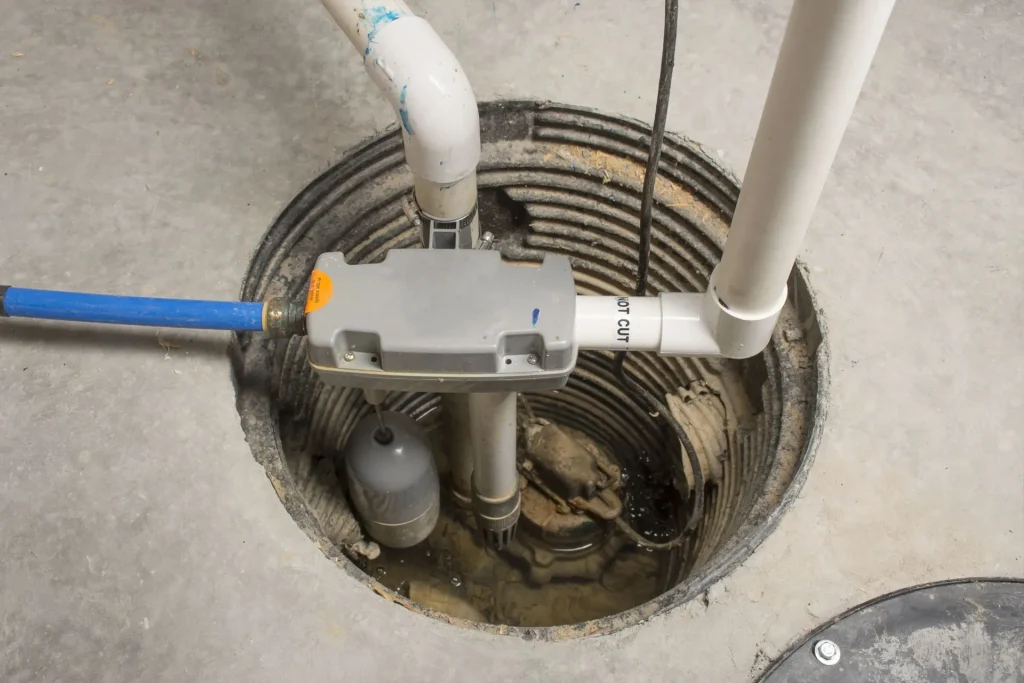
A standard builder-installed basin is typically 18 inches in diameter and 24 inches deep — roughly 26 gallons of usable volume between the “pump on” and “pump off” float switch positions.
At 935 GPH of inflow, that basin fills in under two minutes. The pump kicks on, empties it, kicks off — and the cycle starts again. If the inflow rate is high enough relative to basin volume, the pump can cycle every 30 to 60 seconds. That’s short-cycling, and it’s one of the most common causes of premature motor burnout we see in the field.
A properly sized basin — typically 24 inches in diameter and 36 inches deep for a high-inflow NJ basement — gives the pump time to run in longer, more efficient cycles. Less wear. Longer life. Better performance when it matters most.
Why Battery Backups Are Non-Negotiable in NJ
The Battery Backup Rule
NJ’s heaviest storms — the ones that generate the most inflow — are also the ones most likely to knock out power. A primary pump with no backup is a system that fails at exactly the wrong moment. A battery backup sump pump isn’t an upgrade. For a New Jersey basement, it’s part of a complete system.
The power outage problem is straightforward: your primary pump is electric. When a nor’easter takes out the grid at 2 AM — which happens regularly across Essex, Passaic, and Morris Counties — your primary pump goes with it. Water keeps coming in. Nothing is moving it out.
A quality battery backup sump pump typically handles 1,000–2,000 GPH and can run for several hours on a fully charged battery. That’s not enough to replace a primary pump under full storm load, but it’s enough to protect your basement through a typical outage window.
What a battery backup doesn’t cover: extended outages of 12+ hours, or situations where the primary pump has already failed, and the backup is doing all the work. That’s why the primary system needs to be right-sized in the first place — the backup is insurance, not a substitute.
Not sure if your current system is sized correctly? ARD offers free on-site assessments — no sales pitch, just an honest look at what your basement actually needs. If what you have is sufficient, we’ll tell you that. Schedule a free sump pump assessment →
Proper Discharge Routing — The Part Everyone Gets Wrong
You can have the right pump and the right basin and still end up with a system that underperforms. Discharge routing is where a lot of installations quietly fail.
Every foot of horizontal pipe adds friction. Every elbow reduces flow. A discharge line that runs 40 feet across a basement before going up and out the wall can cut effective pump output by 20–30% compared to a clean, direct run. That loss is on top of the head pressure loss from the vertical lift.
Common mistakes we see:
- Discharging too close to the foundation (water finds its way back in)
- Improper slope on the discharge line (water sits in the pipe and freezes)
- No freeze protection on the exterior termination point
NJ-Specific Freeze-Thaw Considerations
This one matters more in our region than most guides acknowledge. A discharge line that terminates at grade level — or worse, slightly below — can ice over during a hard freeze, blocking the pump’s output entirely. We’ve seen this cause pump burnout in January and February when a mid-winter thaw generates significant inflow, and the discharge line is partially or fully blocked.
The fix is straightforward: a freeze guard fitting at the exterior termination, proper slope throughout the line, and a termination point that drains completely after each pump cycle. It’s a detail that costs almost nothing to do right during installation and can save a pump and a basement during a bad winter event.
These are also the same freeze-thaw cycles that affect NJ foundations more broadly — water that can’t escape efficiently finds other ways in.
How a Professional Sizes a Sump Pump System
When we assess a basement, we’re not looking at the pump in isolation. We’re looking at the whole system: the basin, the inflow history, the drainage area, the discharge routing, and whether there’s a backup in place.
The process starts with the basin itself — measuring the actual diameter and depth, checking where the float switches are set, and looking at how much usable volume exists between cycles. Then we look at the discharge line: length, number of elbows, termination point, and freeze risk. Then we ask about the home’s history — has the pump ever run continuously? Has the basement ever taken on water? How does it behave during a heavy spring rain versus a summer storm?
No two basements are the same. A 1,500 sq ft ranch in West Caldwell with a short, direct discharge run and well-graded landscaping needs a different system than a 2,400 sq ft colonial in Montclair with a finished basement, a long discharge run, and a drainage area that includes a patio and driveway. A formula alone doesn’t get you there.
What we tell every homeowner: the goal isn’t the biggest pump. It’s the right pump, correctly installed, with a properly sized basin and a discharge line that actually works. That system — sized for your specific basement and NJ’s actual storm conditions — is what keeps the water out when it matters.
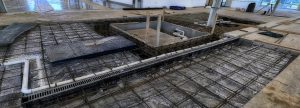
A professional sump pump installation in West Essex, NJ, also means the interior French drain system feeding the basin is doing its job — because a pump can only move water that reaches it. If the drainage system is undersized or improperly routed, even a correctly sized pump won’t keep up.
Ready to Know Where You Stand?
If your pump ran hard during the last storm —or if you’ve never had anyone actually look at the system— the right move is a proper assessment before the next one hits.
Call or text ARD Waterproofing: (201) 646-5936. We’re available 24 hours.
We’ll come out, look at the whole system, and give you a straight answer. If what you have is right for your basement, we’ll tell you that. If it isn’t, we’ll tell you exactly what it needs — and why.
ARD Waterproofing — Licensed NJ Waterproofing Contractors (License #13VH12460700). Serving West Caldwell, Montclair, Morristown, and surrounding communities in Essex, Passaic & Morris Counties since 2015.
Frequently Asked Questions
How do I know if my sump pump is big enough?
The clearest sign is continuous or near-continuous running during a heavy storm. A properly sized pump should cycle on and off — running for a period, emptying the basin, then resting. If it runs without stopping, the system isn’t keeping up with the inflow. That could mean the pump is undersized, the basin is too small, or the discharge line is restricting output. A professional assessment can identify which factor is the problem.
Is a 1/3 HP sump pump enough for a New Jersey home?
For some homes, yes — but it depends on your drainage area, discharge line configuration, and the storm intensity your basement actually sees. A 1/3 HP pump rated at 1,800 GPH delivers roughly 1,100–1,300 GPH under real-world head pressure. In a 1-inch-per-hour storm on a 1,500 sq ft drainage area, that leaves a workable but thin margin. For larger homes, longer discharge runs, or basements with a history of water issues, a 1/2 HP or 3/4 HP system is typically more appropriate for NJ conditions.
Do I need a battery backup sump pump in NJ?
Yes. NJ’s most intense storms —the ones that generate the highest inflow— are also the ones most likely to cause power outages. A primary pump with no backup is a system that can fail at exactly the worst moment. A battery backup sump pump provides protection during outages and serves as a redundancy if the primary pump fails mid-storm. For any finished or semi-finished basement in Essex, Passaic, or Morris County, a battery backup is a standard part of a complete system.
 Will a French Drain Ruin My Landscaping? Here’s the Honest Answer