
Written by the ARD Waterproofing Team — Licensed NJ Basement Waterproofing Specialists serving West Essex, Passaic & Morris Counties
Quick Summary
- A battery backup sump pump is your #1 defense against basement flooding during NJ power outages — but only if you choose the right battery size for your pump’s horsepower and your storm’s expected duration.
- Use the NJ Storm Runtime Formula below to calculate exactly how many hours of protection you actually have before your basement is at risk.
- Water-powered backups and whole-home generators are strong secondary options — each with specific NJ code considerations you need to know before buying.
The lights go out at 11 PM. A Nor’easter is hammering your roof, and you can hear the rain hammering harder. Your sump pump just went silent.
That silence? That’s the sound of your finished basement becoming a swimming pool.
If you’ve lived in New Jersey for more than a few years, you already know this scenario isn’t hypothetical. Between the Passaic River basin flooding, the coastal surge from hurricane remnants, and the rapid snowmelt events that hit Morris and Essex Counties every late winter, NJ homeowners deal with some of the most punishing groundwater conditions on the East Coast. And our grid goes down exactly when we need it most.
The good news: this is a completely solvable problem. Let’s walk through every option — from battery backups to generators — and give you the math to back it up.
Why NJ Homes Are Especially Vulnerable During Outages
Most homes in northern and central New Jersey sit on high water tables. Neighborhoods near the Great Swamp, the Raritan River corridor, and the Barnegat Bay watershed can see groundwater rise within hours of a major storm — sometimes faster.
Here’s the brutal reality: your primary sump pump is 100% useless the moment your power goes out. And in NJ, Nor’easters and tropical storm remnants regularly knock out power for 12 to 72 hours at a stretch. Hurricane Ida in 2021 left parts of Passaic County underwater for days. That’s not a freak event anymore — it’s the new baseline.
This is why a backup system isn’t a luxury. It’s the difference between a dry basement and a $30,000 remediation bill.
Option 1: Battery Backup Sump Pump Systems (The Gold Standard)
For most NJ homeowners, a dedicated battery backup sump pump is the smartest, most reliable solution. It activates automatically the second your power fails — no extension cords, no starting a generator in the dark, no manual intervention.
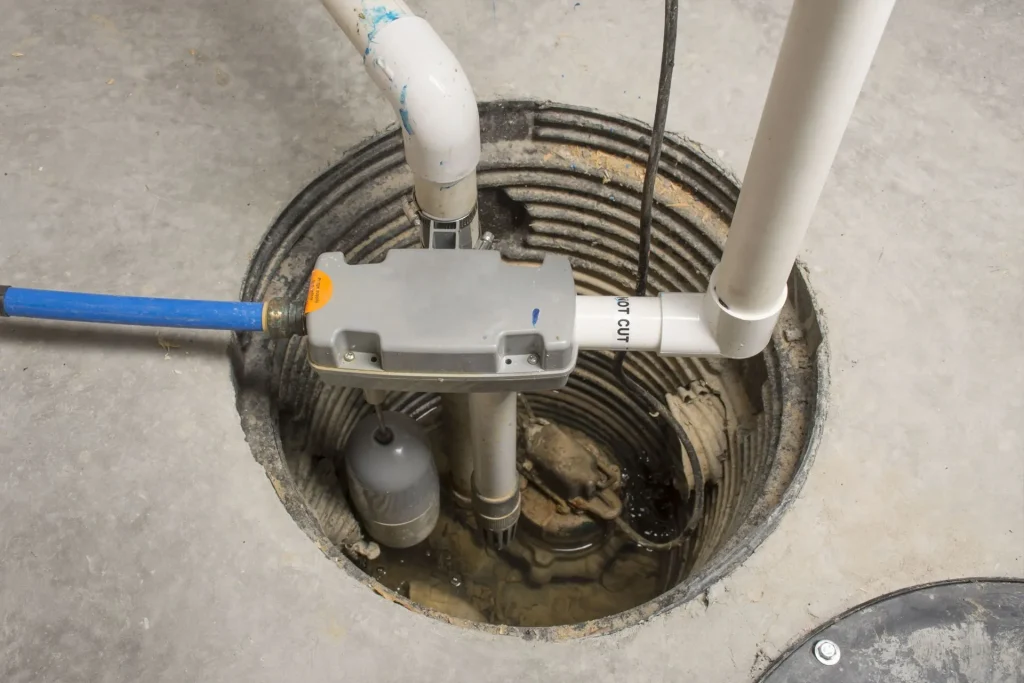
Here’s how it works: a separate pump sits alongside your primary unit in the sump pit. It’s connected to a deep-cycle or AGM (Absorbent Glass Mat) battery that’s kept fully charged by a trickle charger plugged into your wall. When the power dies, the backup kicks in instantly.
AGM vs. Deep Cycle Marine Batteries — Which One Do You Need?
Think of it like this: an AGM battery is a sealed, maintenance-free thermos — it holds its charge longer, handles more charge/discharge cycles, and won’t spill acid if it tips. A traditional deep-cycle marine battery is like an old-school cooler — cheaper upfront, but it needs periodic water top-offs and degrades faster.
For NJ homeowners, AGM is almost always worth the extra cost. They last 3–5 years with proper maintenance vs. 2–3 for standard marine batteries, and they perform better in the cold temperatures that accompany our worst Nor’easters.
The NJ Storm Runtime Formula
This is the question everyone asks, and almost no one answers honestly: How long will my battery backup actually last?
Here’s the formula we use in the field:
Estimated Runtime (hours) = Battery Amp-Hours (Ah) ÷ Pump Draw (Amps)
But your pump doesn’t run constantly — it cycles on and off. A realistic duty cycle during a heavy NJ storm is roughly 50% on / 50% off (the pump runs about 30 minutes per hour). That means you can roughly double the raw number.
A practical example:
| Battery Size | Pump Draw (1/3 HP) | Raw Runtime | NJ Storm Runtime (50% duty) |
| 75 Ah AGM | ~7 Amps | ~10.7 hrs | ~21 hrs |
| 100 Ah AGM | ~7 Amps | ~14.3 hrs | ~28 hrs |
| 75 Ah AGM | ~10 Amps (1/2 HP) | ~7.5 hrs | ~15 hrs |
| 100 Ah AGM | ~10 Amps (1/2 HP) | ~10 hrs | ~20 hrs |
A typical Nor’easter knocks power out for 12–24 hours. A 100 Ah AGM battery paired with a 1/3 HP backup pump gives most NJ homeowners a solid buffer — with room to spare. If you’re in a high-risk flood zone near the Raritan or Passaic River, size up to 100 Ah minimum.
Pro tip from the field: If your basement has a high water table and your pump cycles more than once every 10 minutes during a heavy rain, you’re in a high-inflow situation. Consider a dual-battery setup or a higher-capacity system rated for 1,500+ gallons per hour.
Option 2: Water-Powered Backup Sump Pumps
If you’re on municipal water in NJ, a water-powered backup pump is a genuinely clever option. It uses your home’s water pressure — typically 40–80 PSI from the city line — to create suction and move water out of the pit. No battery, no electricity required.
The tradeoff? It only works if you’re on city water. If you’re in a rural area of Morris County with a private well, this isn’t your solution — your well pump needs electricity too, so you’d lose both systems at once.
There’s also a New Jersey plumbing code consideration: water-powered backup pumps require an approved backflow preventer to protect the municipal supply. This isn’t optional — it’s code. Make sure any installer you hire knows NJ plumbing regulations and pulls the proper permits.
For homes that qualify, the upside is compelling: no battery to replace, no charger to maintain, and it can run indefinitely as long as city water pressure holds.
Option 3: Generator Solutions
A generator can power your primary sump pump directly — which means you keep your full-capacity pump running, not just a backup unit. But there are two very different paths here, and the details matter.
Portable Generators: What You Need to Know First
Your sump pump motor is an induction motor, which means it has a high startup (surge) wattage that’s roughly 2–3x its running wattage. A 1/2 HP pump that runs at ~1,000 watts needs ~2,000–2,500 watts just to start.
| Pump Size | Running Watts | Starting (Surge) Watts | Minimum Generator Size |
| 1/3 HP | ~800W | ~1,500W | 2,000W inverter |
| 1/2 HP | ~1,000W | ~2,000–2,500W | 3,000W generator |
| 3/4 HP | ~1,500W | ~3,000W | 4,000W generator |
Never run a generator indoors or in an attached garage. Carbon monoxide kills fast. In NJ, this is not just common sense — it’s the law. Keep it outside, at least 20 feet from any window or door, and use a heavy-gauge outdoor extension cord (12-gauge minimum for runs over 25 feet).
Whole-Home Standby Generators
If you want the set-it-and-forget-it solution, a whole-home standby generator with an automatic transfer switch is the premium option. It detects the outage, starts automatically within seconds, and powers your entire home — including the sump pump, refrigerator, and HVAC.
The cost is significant ($5,000–$15,000+ installed), but for homeowners in flood-prone zones who’ve already experienced one major basement flood, the math often works out. One serious flood event can easily cost $20,000–$50,000 in damage, remediation, and lost belongings.
The Dual-Pump Setup: Belt and Suspenders
The setup we recommend most often for NJ homeowners in high-risk areas is a primary pump + battery backup pump running in the same pit, with properly installed check valves on each discharge line to prevent backflow.
Here’s why this matters: if your primary pump fails mechanically (not just from a power outage), your battery backup catches it. If the power goes out, the battery backup catches it. You’re covered for both failure modes simultaneously.
When you install a battery backup alongside your primary unit, the check valves are critical — without them, water discharged by one pump can flow back through the other pump’s line, creating a loop that defeats the whole system.
How Often Should You Test and Maintain Your Backup System?
A backup system you haven’t tested is a backup system you can’t trust. Here’s a simple maintenance schedule:
- Monthly: Pour water into the pit manually to trigger the backup pump and confirm it activates.
- Every 3 months: Check the battery charge level with a voltmeter (a fully charged 12V AGM should read ~12.8V or higher).
- Annually: Have a professional inspect the float switch, discharge line, and check valves.
- Every 3–5 years: Replace the AGM battery proactively, even if it seems fine. Don’t wait for it to fail during a storm.
If you’re noticing water seeping in through foundation walls — not just through the pit — that’s a separate issue that no sump pump can fully address. That’s where basement waterproofing solutions come in, and it’s worth having a specialist take a look before the next storm season.
Are There NJ Rebates for Backup Flood Mitigation Systems?
This is a question we get a lot, and the honest answer is: it depends on your municipality and the year. After Hurricane Ida, several NJ counties and FEMA-designated flood zones offered mitigation assistance programs. The NJ Department of Environmental Protection (NJDEP) and local county OEM offices periodically run programs for flood-prone homeowners.
We recommend checking with your local municipality and the NJDEP Blue Acres program for current eligibility. Programs change seasonally, so it’s worth a quick call to your county’s Office of Emergency Management as well.
Conclusion & Next Steps
Here’s the bottom line: New Jersey’s storm season doesn’t care about your schedule, and the grid will go down again. The homeowners who sleep through the next Nor’easter are the ones who solved this problem before it became an emergency.
Start here:
- Identify your pump’s horsepower (it’s on the motor label).
- Use the NJ Storm Runtime Formula above to calculate the battery size you actually need.
- Decide between battery backup, water-powered, or generator based on your home’s setup.
- If you’re in a high-risk zone (Passaic River basin, coastal counties, high water table neighborhoods), go dual-pump.
If you want a second set of eyes on your current setup — or you’re starting from scratch — we’re happy to walk your basement, assess your inflow rate, and give you an honest recommendation. No upsell, no pressure. Just a straight answer.
Get a free estimate from ARD Waterproofing →
We serve West Essex, Passaic, and Morris Counties. We answer our phones, show up on time, and we’ll honor our quote — even if the job gets more complex than expected.
Frequently Asked Questions
How long will a battery backup sump pump last during a power outage?
It depends on your battery size and how hard your pump is working. A 100 Ah AGM battery paired with a 1/3 HP pump will typically run 20–28 hours under realistic NJ storm conditions (50% duty cycle). A 1/2 HP pump draws more current and will cut that to roughly 15–20 hours. Size up if you’re in a high-inflow area near the Passaic or Raritan River basins.
Can I safely run my primary sump pump on a portable inverter generator?
Yes — but you need to match the generator’s surge wattage to your pump’s startup load, not just its running wattage. A 1/2 HP pump needs a generator rated for at least 2,500–3,000 starting watts. Always operate the generator outdoors, at least 20 feet from any opening, and use a 12-gauge outdoor extension cord. Never backfeed your home’s electrical panel without a properly installed transfer switch.
How often should I test and replace my sump pump backup battery?
Test it monthly by manually triggering the float switch. Check the voltage every three months — a healthy 12V AGM should read 12.8V or above at rest. Plan to replace the battery proactively every 3–5 years. Waiting until it fails during a storm is a gamble that rarely pays off.
 What a Clean Waterproofing Installation Actually Looks Like (A Homeowner’s Checklist)
