
Quick Summary
- Wildly different waterproofing quotes usually mean one thing: the scopes of work aren’t the same. Before comparing prices, compare what’s actually included.
- High-pressure contractors intentionally leave out critical line items to look cheaper upfront — then add them back once they’re in your basement.
- Use the checklist in this guide to grade every estimate you receive on an apples-to-apples basis, so you can make a confident, informed decision.
You’ve got three waterproofing quotes sitting on your kitchen table. One is $4,200. One is $9,800. One is $14,500.
They all claim to fix the same problem.
If that scenario sounds familiar, you’re not alone — and you’re not crazy for being confused. In Northern New Jersey, where clay-heavy soil, high water tables, and heavy spring rains put real stress on residential foundations, this is one of the most common situations homeowners face. And it’s one of the most expensive mistakes you can make if you pick the wrong bid for the wrong reasons.
Here’s the thing most contractors won’t tell you: those quotes probably aren’t comparing the same work. The price gap isn’t random. It’s usually the result of one contractor deliberately leaving out scope items to win the bid — and planning to add them back once they’ve got you signed.
Let’s fix that.
Why Waterproofing Quotes Vary So Wildly
Before you can compare estimates, you need to understand how they’re built.
A legitimate waterproofing scope of work has several moving parts: the drainage solution itself (interior French drain, exterior excavation, channel drain, etc.), the sump pump system, discharge planning, waterproofing membrane or sealant, concrete restoration, and a warranty. Each of those has real material and labor costs.
A low-ball quote is almost never a better deal. It’s usually a shorter list.
Think of it like getting three quotes to renovate a kitchen. One contractor prices cabinets, countertops, plumbing, and electrical. Another only prices cabinets. The second quote looks cheaper until you realize you still need everything else — and now you’re negotiating mid-project from a position of zero leverage.
That’s exactly what happens with waterproofing upsells. The scope gets added back in after you’ve signed, after they’ve broken concrete, and after walking away feels impossible.
The 6 Line Items That Disappear From Cheap Estimates
This is the insider part. After reviewing hundreds of scopes of work across West Essex, Passaic, and Morris counties, here are the items that consistently vanish from low-ball bids — and reappear as “necessary additions” once the job starts.
1. Sump Pump Discharge Plan
Every sump pump needs a clearly defined discharge route. In many NJ municipalities, there are specific regulations about where that water can go — it can’t just dump against your foundation or into a neighbor’s yard. A complete estimate will specify the discharge line route, the outlet location, and confirm compliance with local requirements. If it’s missing, ask about it directly.
2. Concrete Removal and Restoration
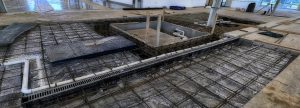
Interior French drain installation requires breaking up your basement floor along the perimeter. A full scope includes both the demo and the concrete restoration after the drain is installed. Many low quotes include the demo. The restoration quietly disappears. Ask: “Does this price include restoring the concrete after the drain is installed?”
3. Waterproofing Membrane or Wall Treatment
The drain manages water that’s already in. A wall membrane or crack injection addresses where it’s entering. These are complementary solutions — not interchangeable. If a quote for an interior drainage scope of work doesn’t mention any wall treatment at all, that’s a scope gap worth questioning.
4. Sump Pump Battery Backup
Power outages and heavy rainstorms in NJ are not a coincidence — they happen at the same time. A sump pump without a battery backup is a liability. Some contractors omit the backup unit to hit a lower price point, then offer it as an “upgrade” after you’ve signed. A complete system includes primary pump, backup pump, and alarm.
5. Haul-Away and Site Cleanup
Breaking concrete creates debris. Digging a trench creates soil. A complete estimate includes a removing that a material from youan r property. If it’s not on the quote, you may be left with a pile of rubble in your driveway and a separate bill to deal with it.
6. Warranty Terms — in Writing
This one is critical. A verbal promise of a “lifetime warranty” means nothing. A complete estimate will reference specific, written transferable warranty terms — including whether it covers labor and materials, whether it transfers to a new owner if you sell, and whether it requires ongoing “maintenance subscriptions” to stay valid. A warranty that requires annual fees is a service contract, not a guarantee.
The Red Flags That Tell You It’s a Sales Pitch, Not an Inspection
There’s a difference between a contractor who diagnoses your problem and one who runs a sales process designed to close you that day. Here’s how to tell them apart.
🚩 “This price is only good today.” Urgency tactics are a classic pressure move. A legitimate contractor’s pricing doesn’t expire at midnight.
🚩 The estimate arrives before they’ve fully inspected the space. If someone quotes you a number before they’ve walked the full perimeter, checked your grading, and looked at your discharge options, they’re guessing — or they’re selling a package regardless of what you actually need.
🚩 The scope is vague. “Waterproofing system — $8,500” tells you nothing. A professional estimate names specific products, linear footage of drain, pump model numbers, and concrete restoration details.
🚩 They badmouth every other contractor. Confident, experienced contractors don’t need to tear down the competition. They let their scope of work speak for itself.
🚩 No NJ contractor’s license number on the paperwork. This is non-negotiable. Every legitimate waterproofing contractor operating in New Jersey is required to carry a valid license. Ask for it. Verify it.
How to Actually Compare Two Estimates Side-by-Side
Here’s the framework. Pull out both estimates and go line by line.
Step 1: Normalize the scope. Does each estimate include the same six items listed above? If one does and one doesn’t, they’re not comparable yet. Ask the lower-priced contractor to add the missing items and re-quote. The price gap often shrinks significantly — or disappears entirely.
Step 2: Check the warranty language. Not just whether a warranty exists, but what it covers, how long it lasts, whether it’s transferable, and whether it requires ongoing fees. A true lifetime transferable warranty is a meaningful differentiator. A “warranty” that expires if you miss an annual service call is not.
Step 3: Verify the license. New Jersey’s Division of Consumer Affairs maintains a public database of licensed contractors. Takes two minutes. Non-negotiable.
Step 4: Ask one question. “Will this price change after you start the job?” A contractor who honors their original quote — even when a job gets more complex — is telling you something important about how they operate. Listen carefully to how they answer.
Step 5: Trust your read of the inspection. Did the contractor walk your full property? Did they explain what’s causing the water entry, not just what they plan to install? Did they answer your questions without pivoting to close the sale? The quality of the inspection usually predicts the quality of the work.
A Note on NJ Soil Conditions and Why They Matter
This isn’t just generic advice — it’s specific to where you live.
Northern New Jersey sits on a mix of clay-heavy glacial soils that drain poorly and retain moisture against foundation walls for extended periods after heavy rain. Combine that with the region’s high water table in low-lying areas across Morris and Passaic counties, and you have conditions that demand a properly engineered drainage solution — not a one-size-fits-all package.
This is exactly why a thorough on-site inspection matters more here than in other regions. A contractor who shows up, looks at your basement floor, and immediately quotes you an interior French drain without assessing your exterior grading, your soil type, or your discharge options isn’t giving you a diagnosis. They’re giving you a menu item.
What a Trustworthy Estimate Actually Looks Like
To make this concrete: a complete, honest waterproofing estimate for a Northern NJ home should include:
- Specific solution (interior drain, exterior excavation, channel drain — or a combination)
- Linear footage or square footage of work
- Sump pump model, capacity, and backup system
- Discharge plan and outlet location
- Wall treatme, or crack injection (if applicable)
- Concrete removal and restoration
- Haul-away and site cleanup
- Written warranty with transferable terms
- NJ contractor license number
- Total price that won’t change once work begins
If any of these are missing, it’s not a complete estimate. It’s a starting price.
Not sure if your current quote covers everything it should? Our no-upsell inspection process is built around giving you a complete, transparent scope of work — nothing added, nothing hidden. We’ll walk your property, explain exactly what we find, and give you a written estimate that won’t change once we start.
Conclusion & Next Steps
Comparing waterproofing estimates doesn’t have to feel like navigating a car dealership. Once you know what a complete scope of work looks like, the process gets a lot clearer — and the contractors who are cutting corners become a lot easier to spot.
The short version: don’t compare prices until you’ve compared scopes. Add the missing line items, check the warranty language, verify the license, and ask whether the price will hold. The contractor who answers those questions confidently and completely — without pressure, without urgency tactics, and without a pitch — is usually the one worth trusting.
If you’re in West Essex, Passaic, or Morris County and want a second opinion on a quote you’ve already received, we’re happy to take a look. We answer our phones, show up on time, and we’ll give you a straight answer — even if that answer is “your other quote is actually fair.”
Call or text ARD Waterproofing anytime — we’re available 24/7.
(Military and first responders receive a 12% discount.)
Frequently Asked Questions
Why do foundation repair quotes vary so much?
Usually because the scopes of work aren’t the same. Low bids often omit critical line items — like concrete restoration, battery backup systems, or a defined sump pump d,ischarge plan — to hit a lower headline number. Before comparing prices, verify that every estimate includes the same complete scope of work.
What should a standard waterproofing estimate include?
A complete estimate should specify the drainage solution (type and linear footage), sump pump model and backup system, discharge plan, wall treatment if applicable, concrete removal and restoration, site cleanup, and written warranty terms. It should also include the contractor’s NJ license number and a firm total price.
How can I tell if a contractor is trying to upsell me?
Watch for same-day pricing pressure, vague scope language (no product names or footage) the firm’s estimate delivered before a thorough inspection, and warranties that require ongoing service fees. A trustworthy contractor will give you a detailed written scope, answer your questions without rushing, and honor their original quote even if the job gets more complex.
 Do You Need a Permit for Basement Waterproofing in NJ?